BYRON'S GAMES

  • Start Here
  • Meet Byron
  • Get the Game
  • Video Series
  • Blog
  • Explore More
  • Store
  • Get the App!
  • Join our Community
  • Start Here
  • Meet Byron
  • Get the Game
  • Video Series
  • Blog
  • Explore More
  • Store
  • Get the App!
  • Join our Community

Flag Fact Friday: Tuvalu

3/13/2020

1 Comment

 
Picture
The current flag of Tuvalu was instated when the country became independent in 1978, after the separation from the Gilbert and Ellice Islands in 1976. ⠀
⠀
Like many former and current British dependencies, the Tuvaluan flag is a blue ensign based on the Union Flag, which is shown in the upper left canton of the flag; but has a sky blue field rather than the conventional blue. The previous flag (with the Gilberts) was also based on the Union Flag but with the coat of arms created by Sir Arthur Grimble in 1932, the resident commissioner of the British colony. ⠀
⠀
The stars represent the nine islands which comprise Tuvalu; the arrangement is geographically correct, with the east towards the top (i.e. north to the left). ⠀
Tuvalu is officially the smallest Commonwealth realm. It is also the second smallest country by population in the world. Tuvalu, formerly known as the Ellice Islands, is a tiny little country in the Pacific Ocean. The country consists of three reef islands and six atolls. ⠀
⠀
Recently, Tuvalu has gained significant media attention worldwide because its low-lying land is so susceptible to rising sea levels. The beaches surrounding the atolls are sinking due to erosion caused by waves and this is exacerbated by rising sea levels.
1 Comment

Flag Fact Friday: Zimbabwe

3/6/2020

1 Comment

 
Picture
The national flag of Zimbabwe (Shona: mureza weZimbabwe) consists of seven even horizontal stripes of green, gold, red and black with a white triangle containing a red 5-pointed star with a Zimbabwe Bird. The present design was adopted on 18 April 1980, when Zimbabwe won its independence from the United Kingdom. The soapstone bird featured on the flag represents a statuette of a bird found at the ruins of Great Zimbabwe. The bird symbolizes the history of Zimbabwe; the red star beneath it officially stands for the nation's aspirations but is commonly thought to symbolize socialism, and the revolutionary struggle for freedom and peace. The design is based on the flag of Zimbabwe's ruling party, the Zimbabwe African National Union – Patriotic Front.
1 Comment

Flag Fact Friday: Liberia

2/28/2020

1 Comment

 
Picture
The eleven stripes on the Librarian flag symbolize the signatories of the Liberian Declaration of Independence, red and white symbolizing courage and moral excellence. The white star represents the first independent western-styled republic in Africa, above the blue square representing the African continent. The Liberian flag is modeled after and resembles the American flag at the time in the 1820s and 1830s, (26 stars / states) because Liberia was founded, colonized, established, and controlled by free people of color and freed African-American and Caribbean / West Indies slaves as settlers from the United States and the Caribbean with the help and support from the American Colonization Society (ACS), which was a private organization that sent free people of color as well as freed slaves as settlers from the United States and the Caribbean. When the settlers from the United States arrived in Liberia in 1822, they identified themselves as "Americo-Liberians" in an effort to separate themselves from the native Africans and other settlers.
1 Comment

February 26th, 2020

2/26/2020

1 Comment

 
Picture
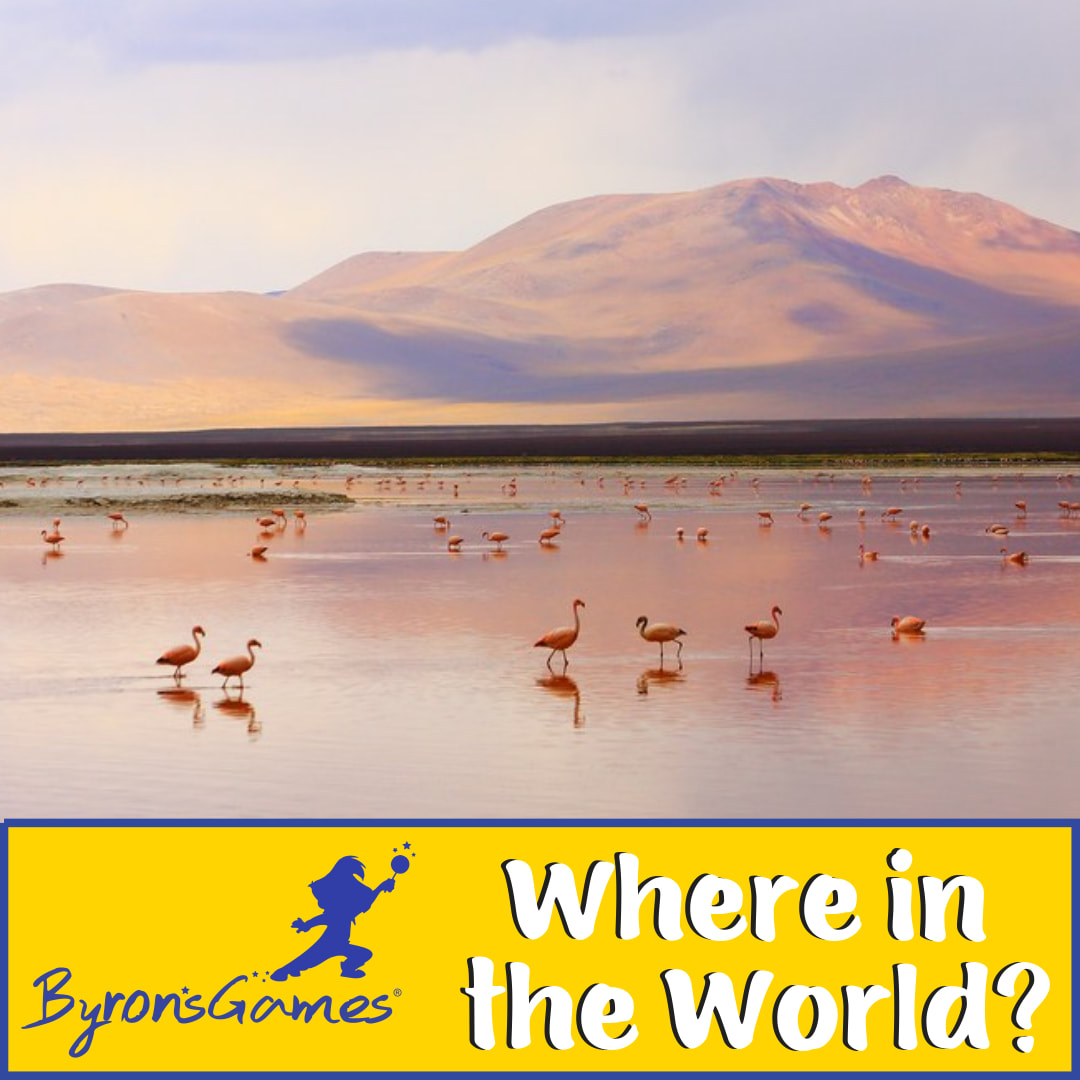
Laguna Colorada (Red Lagoon) is a shallow salt lake in the southwest of the altiplano of Bolivia, within Eduardo Avaroa Andean Fauna National Reserve and close to the border with Chile.

The lake contains borax islands, whose white color contrasts with the reddish color of its waters, which is caused by red sediments and pigmentation of some algae.

Flamingos are drawn to the lake thanks to its abundant supply of plankton. Three of the world’s six species of flamingo can be found here: the Chilean, Andean and the James’ Flamingo. That last one is incredibly rare – the species is only found in the high Andean plateaus and was thought to be extinct until a small population was rediscovered in 1956. Curiously, the flamingos are naturally white; they look pink because the red algae stains their feathers.
1 Comment

Flag Fact Friday: Bosnia and Herzegovina

2/21/2020

2 Comments

 
Picture
The flag of Bosnia and Herzegovina (Bosnian: zastava Bosne i Hercegovine) contains a wide medium blue vertical band on the fly side with a yellow right triangle abutting the band and the top of the flag. The remainder of the flag is medium blue with seven full five-pointed white stars and two half stars top and bottom along the hypotenuse of the triangle.

The three points of the triangle stand for the three main ethnic groups (or "constituent peoples") of Bosnia and Herzegovina: Bosniaks, Croats, and Serbs. The triangle represents the approximate shape of the territory of Bosnia and Herzegovina. The stars, representing Europe, are meant to be infinite in number and thus they continue from top to bottom. The flag features colors often associated with neutrality and peace – white, blue, and yellow. They are also colors traditionally associated with Bosnian culture and history. The blue background is invocative of the flag of Europe.
2 Comments

Where In The World Wednesday: Denali National Park

2/19/2020

1 Comment

 
Picture
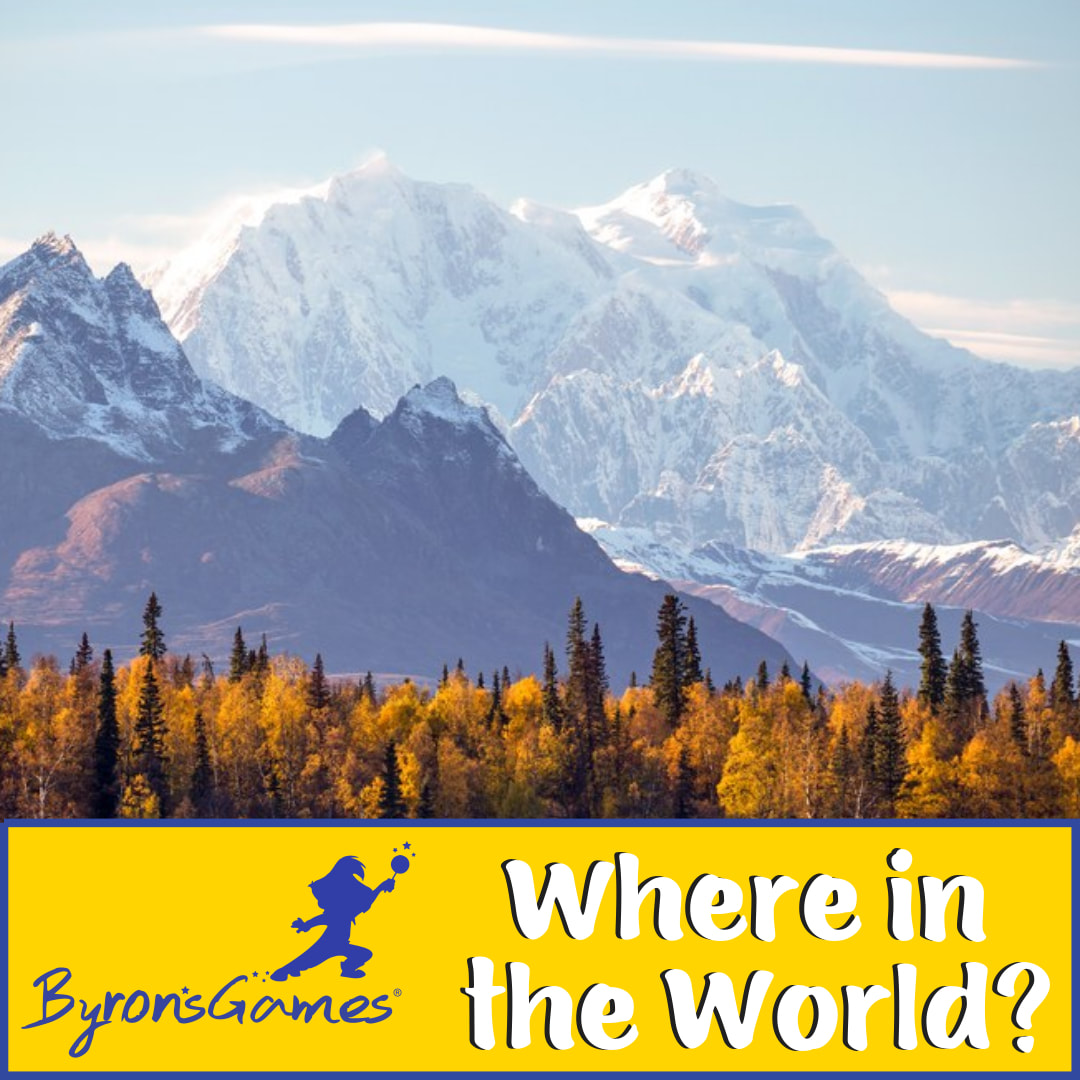
Denali National Park and Preserve is an American national park and preserve located in Interior Alaska, centered on Denali, the highest mountain in North America. The park and contiguous preserve encompass 6,045,153 acres (9,446 sq mi; 24,464 km2) which is larger than the state of New Hampshire. On December 2, 1980, 2,146,580-acre (3,354 sq mi; 8,687 km2) Denali Wilderness was established within the park. Denali's landscape is a mix of forest at the lowest elevations, including deciduous taiga, with tundra at middle elevations, and glaciers, snow, and bare rock at the highest elevations. The longest glacier is the Kahiltna Glacier. Wintertime activities include dog sledding, cross-country skiing, and snowmobiling.
​
Denali is home to a variety of North American birds and mammals, including an estimated 300-350 grizzly bears on the north side of the Alaska Range (70 bears per 1000 square miles) and an estimated 2,700 black bears (334 per 1,000 square miles). As of 2014, park biologists were monitoring about 51 wolves in 13 packs (7.4 wolves per 1,000 square miles), while surveys estimated 2,230 caribou in 2013, and 1,477 moose in 2011. Dall sheep are often seen on mountainsides. Smaller animals such as coyotes, hoary marmots, shrews, Arctic ground squirrels, beavers, pikas, and snowshoe hares are seen in abundance. Red foxes, martens, lynxes, wolverines also inhabit the park, but are more rarely seen due to their elusive natures.

Many migratory bird species reside in the park during late spring and summer. There are waxwings, Arctic warblers, pine grosbeaks, and wheatears, as well as ptarmigan and the majestic tundra swan. Raptors include a variety of hawks, a variety of owls, and gyrfalcons, as well as the abundant but striking golden eagles.
1 Comment

Flag Fact Friday: Sri Lanka

2/14/2020

1 Comment

 
Picture
The flag of Sri Lanka, also called the Lion Flag or Sinha Flag, consists of a gold lion holding a kastane sword in its right fore-paw in a maroon background with four gold bo leaves, one in each corner. This is bordered by gold, and to its left are two vertical stripes of equal size in green and orange, with the orange stripe closest to the lion. The lion and the maroon background represent the Sinhalese, while the saffron border and four Bo leaves represent Buddhism and the four Buddhist concepts of Mettā, Karuṇā, Muditā and Upekshā respectively. The stripes represent the two main minorities: the orange representing the Sri Lankan Tamils and the green representing Sri Lankan Muslims. ​
1 Comment

Where In The World Wednesday: Boracay, Philippines

2/12/2020

1 Comment

 
Picture
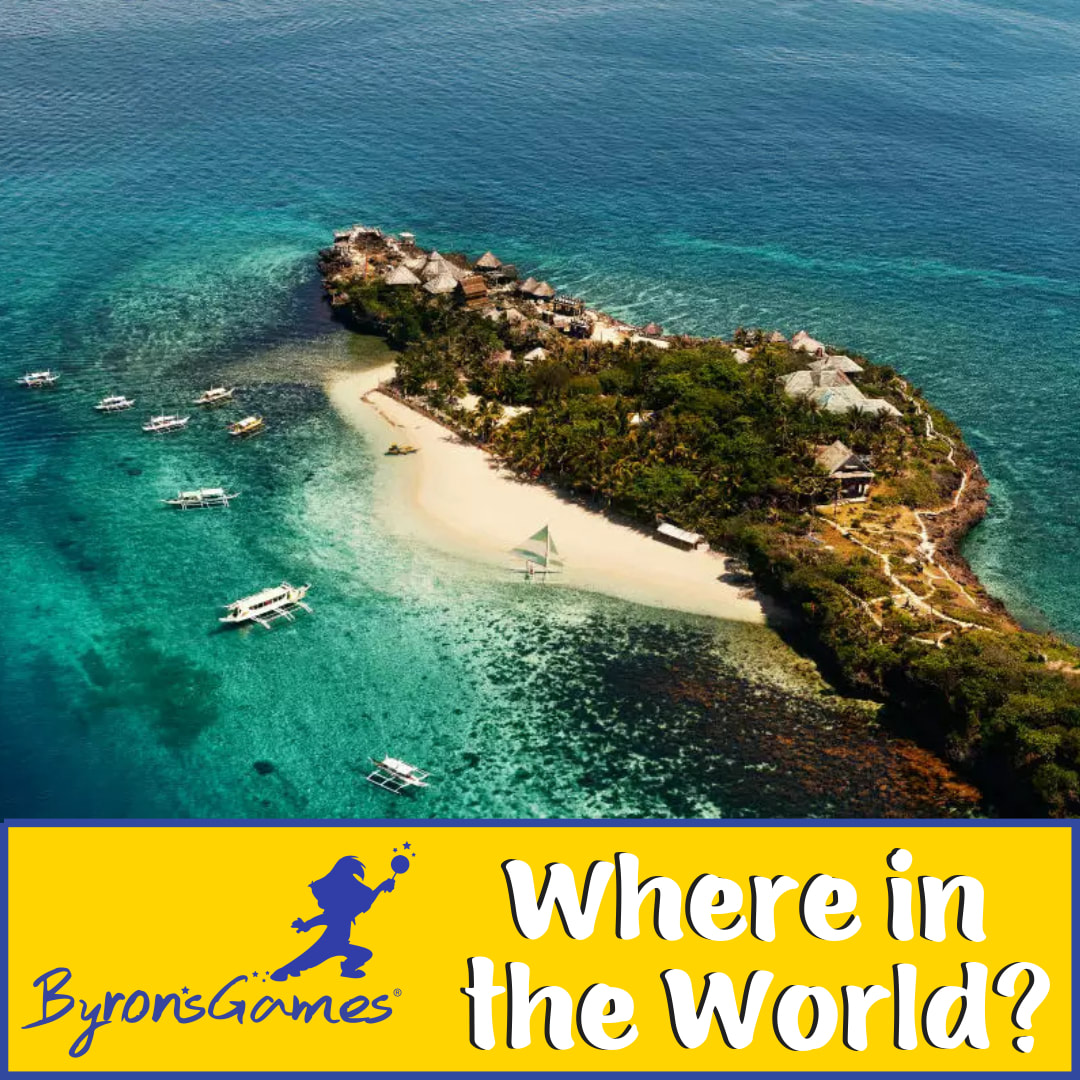
Boracay is a small island in the Philippines, 7 km long and 1 km wide, located in the Western Visayas approximately 315 kilometers (196 miles) south of Manila and 2 kilometers (1.2 mi) off the northwest tip of Panay Island. Boracay has a population of 32,267 as of February 2016.

The island comprises the barangays of Manoc-Manoc, Balabag, and Yapak in the municipality of Malay, in Aklan Province. The island is administered by the Boracay Inter-agency Task Force. Apart from its white-sand beaches, Boracay is also famous for being one of the world's top destinations for relaxation. As of 2013, it was emerging among the top destinations for tranquility and nightlife.

Boracay was awarded as the 2012 Best Island in the World by the international travel magazine Travel + Leisure. In 2014, the resort island was at the top of the "Best Islands in the World" list published by the international magazine Condé Nast Traveler. In 2016, Boracay headed the magazine's list of "Top 10 destinations to watch".

In April 2018, the Philippine Government decreed a 6-month closure of the island for tourists to undertake major renovation works, especially of the sewage system, which had become obsolete and insufficient. It re-opened in October 2018, with a set of new rules meant to address a variety of issues.


1 Comment

Flag Fact Friday: Comoros

2/7/2020

1 Comment

 
Picture
The first official flag of Comoros was designed and adopted for local use in 1963 by Suzanne Gauthier, before Comoros gained its independence. It had a white crescent at upper hoist facing the fly, four stars in a diagonal, and used a 5:7 proportion with a green background. ⠀
With the adoption of a new constitution in 1992, the flag changed again such that the crescent and stars were rotated to face upward rather than down and to the right. ⠀
The adoption of yet another constitution changed the flag again in 1996, rotating the flag to face the fly and adding a white inscription to the lower hoist and another to the upper fly. ⠀
The design consists of a white crescent with four white five-pointed stars inside of a green triangle. The flag has four stripes, representing four islands of the nation: Yellow is for Mohéli, White is for Mayotte (claimed by Comoros but administered by France), Red is for Anjouan, and Blue is for Grande Comore. The four stars on the flag also symbolize the four islands of the Comoros. The star and crescent symbol stands for their main religion, Islam.
1 Comment

Where In The World Wednesday: Antarctica

2/5/2020

1 Comment

 
Picture
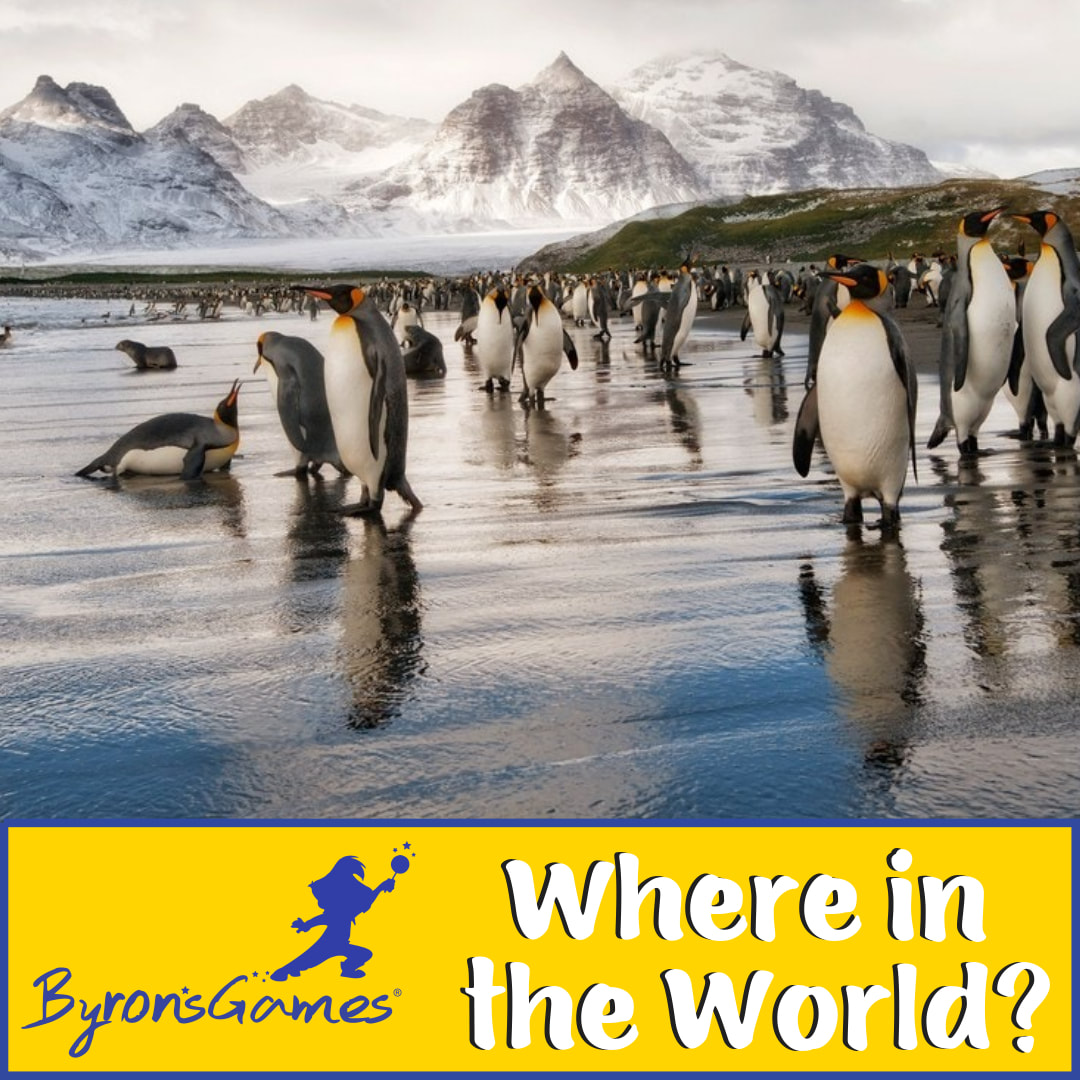
​Antarctica is Earth's southernmost continent. It contains the geographic South Pole and is situated in the Antarctic region of the Southern Hemisphere, almost entirely south of the Antarctic Circle, and is surrounded by the Southern Ocean. At 14,200,000 square kilometers (5,500,000 square miles), it is the fifth-largest continent and nearly twice the size of Australia. At 0.00008 people per square kilometer, it is by far the least densely populated continent. About 98% of Antarctica is covered by ice that averages 1.9 km (1.2 mi; 6,200 ft) in thickness,[5] which extends to all but the northernmost reaches of the Antarctic Peninsula.

Antarctica, on average, is the coldest, driest, and windiest continent, and has the highest average elevation of all the continents.[6] Most of Antarctica is a polar desert, with annual precipitation of 200 mm (7.9 in) along the coast and far less inland; there has been no rain there for almost 2 million years, yet 80% of the world freshwater reserves are stored there. The temperature in Antarctica has reached −89.2 °C (−128.6 °F) (or even −94.7 °C (−135.8 °F) as measured from space[8]), though the average for the third quarter (the coldest part of the year) is −63 °C (−81 °F). Anywhere from 1,000 to 5,000 people reside throughout the year at research stations scattered across the continent. Organisms native to Antarctica include many types of algae, bacteria, fungi, plants, protista, and certain animals, such as mites, nematodes, penguins, seals, and tardigrades. Vegetation, where it occurs, is tundra.
1 Comment
<<Previous
Forward>>

    Categories

    All
    Events
    Family
    Flag Facts
    Golf
    Hero Highlight
    Math
    Music
    Virtual Learning
    Where In The World
    World Geography

Start Here
Meet Byron
Get the Game
Have Fun
Explore More
Store
Get the App!

Copyright © 2025 - Byron's Games